















Build Elite SOC Analysts and DFIR Investigators

Transform your security operations and forensics teams into proactive threat hunters who cut through alert noise, detect advanced adversaries using AI-driven, MITRE ATT&CK-mapped scenarios, and investigate incidents under real-world pressure.

Detection. Investigation. Response.

Build the skills behind every investigation

Give analysts time to work through realistic incidents, make decisions, and explain their reasoning. Shape the training around each person's experience and the work your SOC needs them to do. Use the AI-powered pathway builder to recommend relevant courses and labs, then review the curriculum before assigning it.

  1. Triage the alert

    Review the signal, check the context, and decide what needs attention. Practise distinguishing suspicious activity from routine behaviour.

    SIEM alerts · Endpoint telemetry · Identity logs

    Put it into practice

    A clear escalation with the evidence the next analyst needs.

  2. Follow the evidence

    Connect activity across hosts, accounts, and networks. Reconstruct what happened and use the evidence to guide containment decisions.

    Host forensics · Network analysis · Incident response

    Put it into practice

    An incident timeline, an assessment of scope, and a response plan.

  3. Look beyond the alert

    Start with a hypothesis and search for activity that existing detections may have missed. Turn what you learn into a detection you can test.

    Threat hunting · ATT&CK mapping · Detection engineering

    Put it into practice

    A tested hypothesis and a documented detection improvement.

A Complete SOC & DFIR Training Platform

Build detection and response capabilities in realistic enterprise cyber ranges, mapped to the tools and adversary techniques your analysts face in production, with intelligent learning paths that target each analyst's gaps.

ATT&CK-Mapped Threat Detection & Live-Fire Drills

Master threat detection using enterprise SIEM, EDR, and XDR platforms in MITRE ATT&CK-mapped scenarios. Run incident response drills, CTF competitions, and crisis simulations that test your team under real-world pressure.

Hands-on training with real malware samples and APT attack chains in isolated enterprise environments
MITRE ATT&CK-mapped detection scenarios with coverage gap analysis and readiness scoring
Incident response drills and CTF competitions that build speed, teamwork, and decision-making under pressure
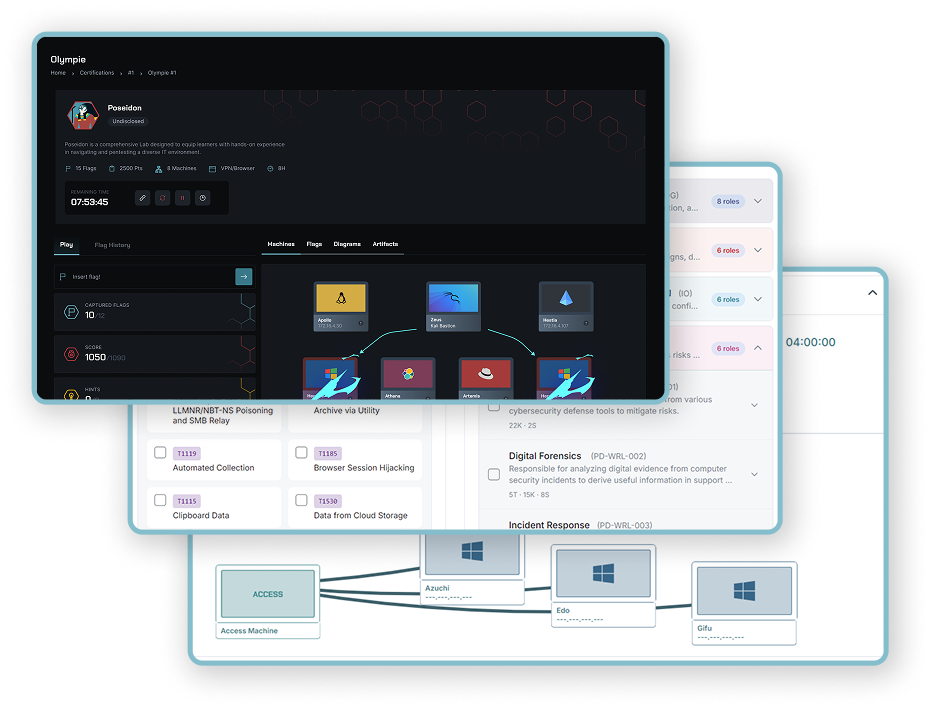
Explore framework categories, select credential access in MITRE ATT&CK, and open relevant Active Directory practice.

Enterprise-Grade Digital Forensics & Incident Response

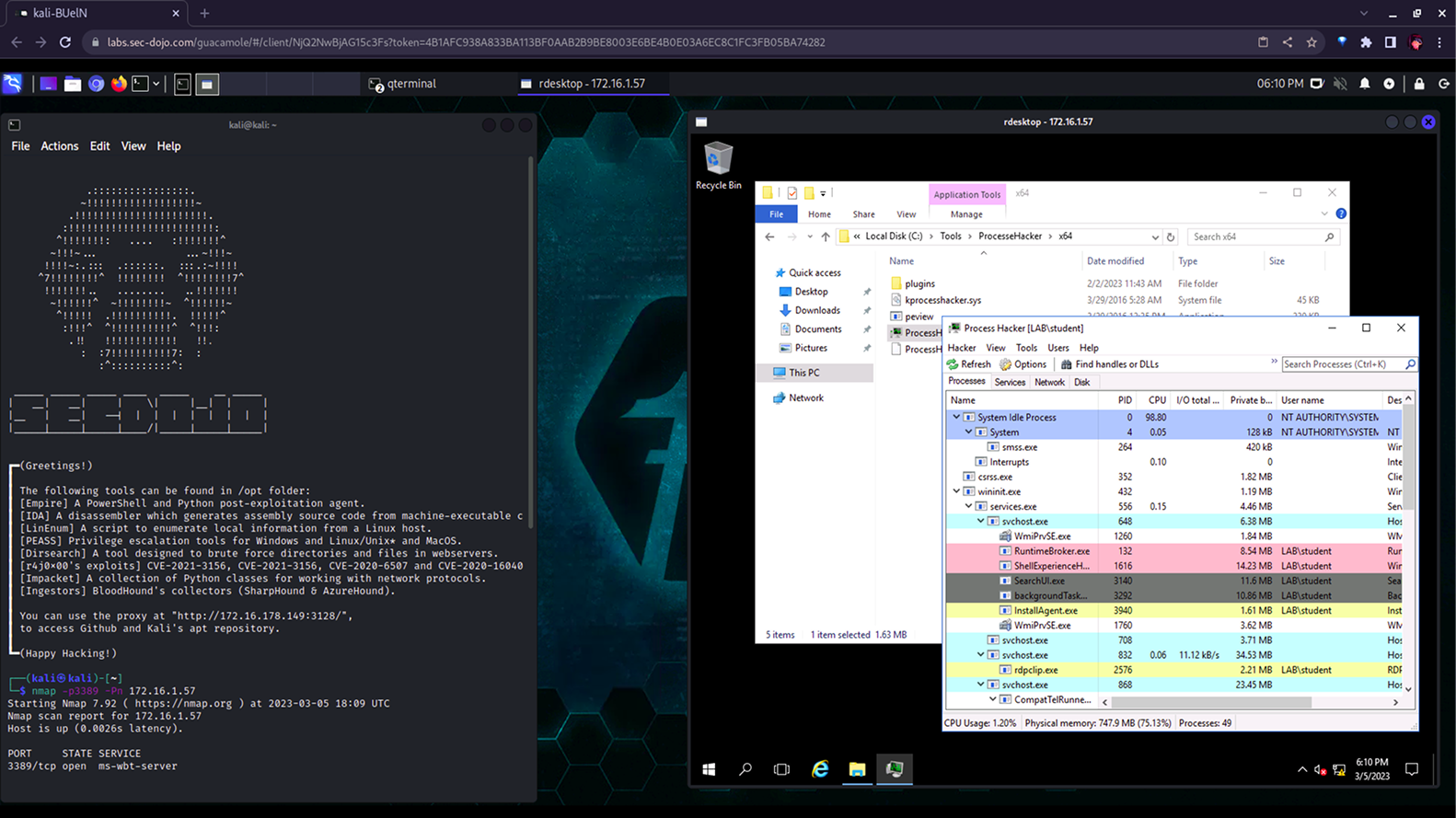
Build DFIR capabilities through immersive investigations covering endpoint, network, memory, and cloud forensics using the same tools and procedures your team deploys in production.

Full investigation lifecycle: disk, memory, network, and cloud forensics with industry-standard tools
Real-world incident scenarios from ransomware to APT campaigns with measurable performance benchmarks
Chain of custody, evidence preservation, and expert witness testimony preparation
Enterprise-Grade Digital Forensics & Incident Response

Give Each Analyst a Clear Next Step

Build a pathway around the work your SOC needs to do. Describe your training goal, review the recommended courses and labs, and arrange the resources into a curriculum your analysts can follow.

Connect Windows security foundations with SOC analysis and SOC engineering
Choose the courses and labs that fit your team's current priorities
Set the learning order, then use progress and practical results to plan what follows
Start with a SOC training goal, review recommended resources, and assemble courses into an ordered learning pathway.

Build and Run Your SOC Team

We combine our expertise with the platform to help you stand up and run a complete SOC upskilling program, from role-based skills assessment through continuous training, evaluation, and analyst retention.

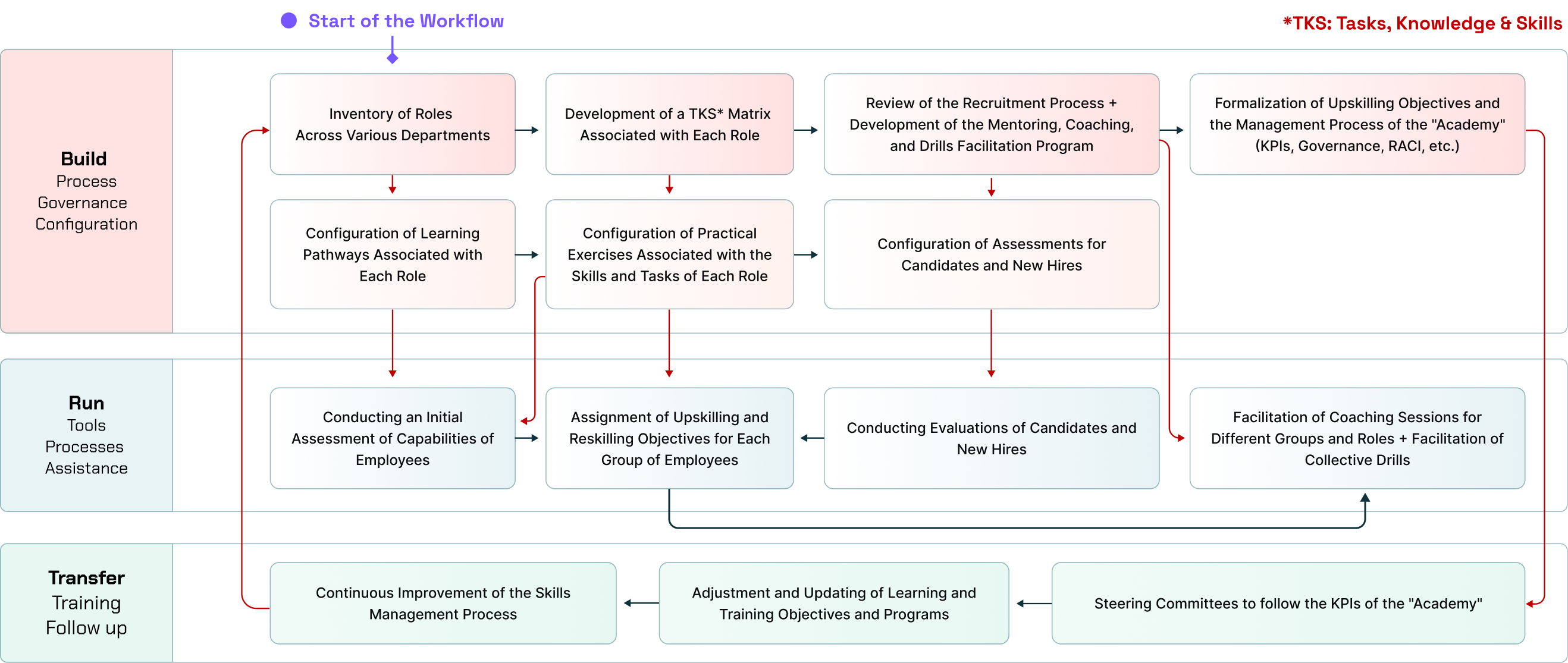
SecDojo SOC Academy workflow: build, run, and continuously improve your security operations training program

Trusted by Leading Security Operations Teams Worldwide

  • Eurafric Information
  • KPMG
  • NITDA
  • Yogosha
  • SYSTRA
  • ENGIE
  • OCP
  • AXA
  • MAP
  • DGI
  • FEC
  • Solocal
  • AUSIM
  • TotalEnergies
  • KIABI
  • ECOWAS
  • Crédit Agricole du Maroc
  • DGSSI
  • Orange
  • 1337
  • Cyber Test Systems
  • Marjane
  • Bourse de Casablanca
  • MTNIMA

IT Services

Eurafric Information

“SecDojo transformed the way I approach ethical hacking and computer security. The 'lab' type environments simulate real-world scenarios, offering a valuable opportunity to apply theoretical knowledge to practical situations…”

Frequently Asked Questions

Questions about training for security operations, investigations, and incident response.

SOC analyst training focuses on real-time threat detection, monitoring, and alert triage using SIEM and EDR platforms. DFIR (Digital Forensics and Incident Response) training goes deeper into investigating security incidents after they occur, including disk and memory forensics, malware analysis, and evidence collection. SecDojo provides comprehensive training across both disciplines, as modern security teams need skills in both proactive detection and reactive investigation.

The cybersecurity talent shortage means experienced SOC analysts are expensive, scarce, and frequently poached. Organizations that rely solely on hiring face 6+ month ramp-up times and constant turnover. SecDojo's hands-on training develops your existing team's capabilities faster and more cost-effectively: junior analysts reach mid-level proficiency in months instead of years, reducing recruitment dependency and improving retention while building institutional knowledge that external hires can't replicate.

SecDojo uses realistic cyber ranges that simulate enterprise environments with actual attack scenarios, real malware samples (in isolated sandboxes), and production-grade security tools. Analysts practice detecting and responding to threats like ransomware, APTs, insider threats, and zero-day exploits in a safe environment that mirrors what they'll encounter in production SOCs. Our scenarios are mapped to the MITRE ATT&CK framework and updated regularly to reflect current threat landscapes.

SecDojo combines dedicated enterprise lab environments, structured learning, and practical team exercises. The AI-powered pathway builder recommends courses and labs from your goals and selected skills. Managers review the curriculum, follow learning and exercise results, and use framework mappings and lab writeups to guide development.

SecDojo provides hands-on training with enterprise SIEM platforms (Splunk, QRadar, Sentinel), EDR/XDR solutions (CrowdStrike, SentinelOne, Microsoft Defender), SOAR platforms, forensics tools (FTK, EnCase, Volatility, Autopsy), network analysis tools (Wireshark, Zeek), and threat intelligence platforms. Analysts gain practical experience configuring detection rules, creating correlation searches, conducting forensic investigations, and operationalizing threat intelligence across the entire security operations stack.

Most organizations see measurable improvements in 3 to 6 months. Key metrics like mean time to detect (MTTD), mean time to respond (MTTR), false positive rates, and escalation accuracy typically improve significantly within the first quarter. Junior analysts often demonstrate proficiency equivalent to mid-level analysts within 6 months, compared to 18+ months with traditional training approaches. SecDojo's analytics dashboards track these metrics continuously so you can demonstrate progress to leadership.

Yes. SecDojo scenarios can be tailored to your organization's specific technology stack, network architecture, and threat profile. Whether your SOC runs Splunk or Sentinel, monitors OT/ICS environments, or needs to train against industry-specific threat actors, we adapt the training environment to match. Purple team exercises allow your SOC and red team to collaborate on validating your actual detection capabilities against realistic adversary emulation.

Yes! SecDojo's hands-on training aligns with and prepares analysts for industry certifications including GCIA (GIAC Certified Intrusion Analyst), GCIH (GIAC Certified Incident Handler), GCFA (GIAC Certified Forensic Analyst), GNFA (GIAC Network Forensic Analyst), and other SOC and DFIR-focused certifications. The practical, scenario-based training ensures analysts don't just pass exams but can actually apply their knowledge to detect and respond to real threats.

SecDojo offers AI-powered tiered learning paths that scale from foundational skills to advanced capabilities. Junior analysts (Tier 1) start with alert triage, SIEM basics, and incident classification. Mid-level analysts (Tier 2) progress to advanced correlation, malware analysis, and incident response. Senior analysts and threat hunters (Tier 3) tackle sophisticated adversary emulation, custom detection engineering, and proactive threat hunting campaigns. Managers can use AI-assisted pathway recommendations to select relevant courses and labs, then adjust assignments based on each analyst's progress.

Build Enterprise Cyber Resilience at Scale

Discover how SecDojo builds measurable resilience and operational readiness across your entire organization with hands-on cyber-range training.

Comprehensive platform demonstration with mission-critical scenarios
Technical assessment and organizational readiness planning
Training program deployment strategy and integration consulting

Trusted by government, military, finance, and industrial sectors.